
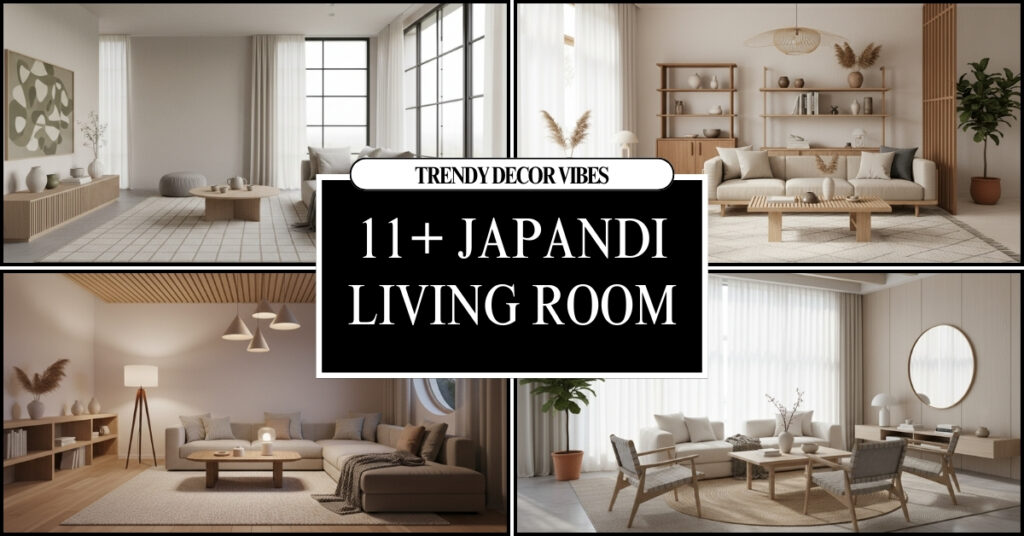
Japandi living rooms combine Japanese minimalism and Scandinavian warmth to create a balanced, serene, and functional interior. This style emphasizes simplicity, natural materials, and muted color palettes that make the space feel calm and welcoming. Every furniture piece, textile, and decor item is chosen carefully to enhance comfort while keeping the design clean and uncluttered. The result is a living room that feels elegant yet practical, merging contemporary sophistication with cozy functionality.
Japandi interiors focus on thoughtful design and intentionality in every element. From low-profile seating to natural wood accents and soft lighting, this style celebrates quality craftsmanship, minimal ornamentation, and harmony. It prioritizes clean lines, neutral tones, and sustainable materials to promote a peaceful environment. The following twelve Japandi living room ideas will inspire you to create a stylish and calming space that is both visually pleasing and highly functional.
1. Neutral Color Palettes for Calm and Harmony
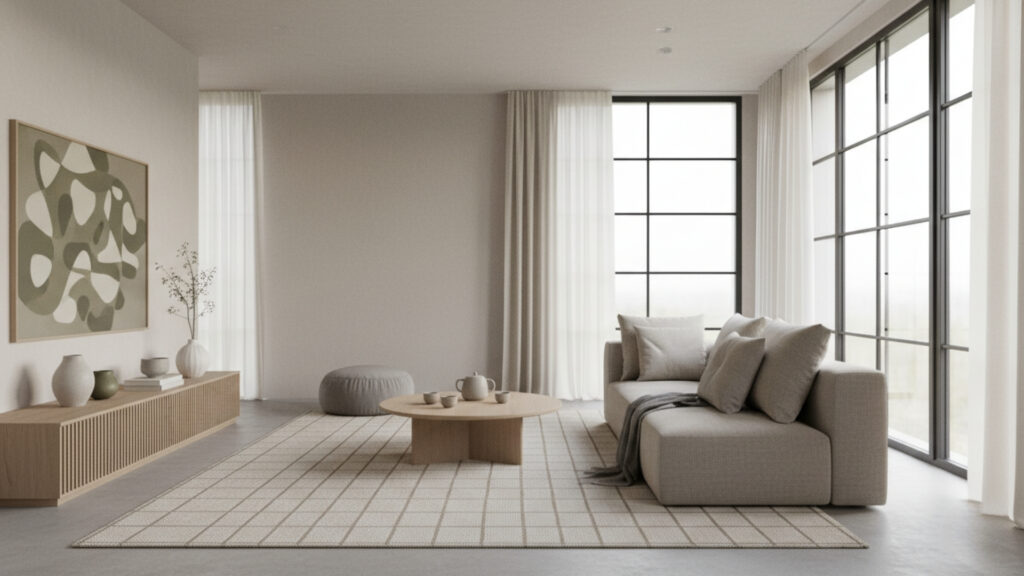
Neutral colors are a cornerstone of Japandi design, setting the tone for a calm and balanced living room. Shades like beige, taupe, soft gray, and muted whites create a soothing backdrop for furniture and decor. Subtle accent colors inspired by nature, such as olive greens, sandy hues, or soft blues, add depth without overwhelming the space.
Using a cohesive neutral palette enhances natural light and makes the room feel more open and airy. Walls, furniture, and textiles in muted tones ensure a visually harmonious environment. This approach allows other elements, like wooden accents and decorative pieces, to stand out naturally. By emphasizing calmness and simplicity, neutral colors anchor the Japandi living room with understated elegance.
2. Low-Profile Furniture for Minimalist Comfort
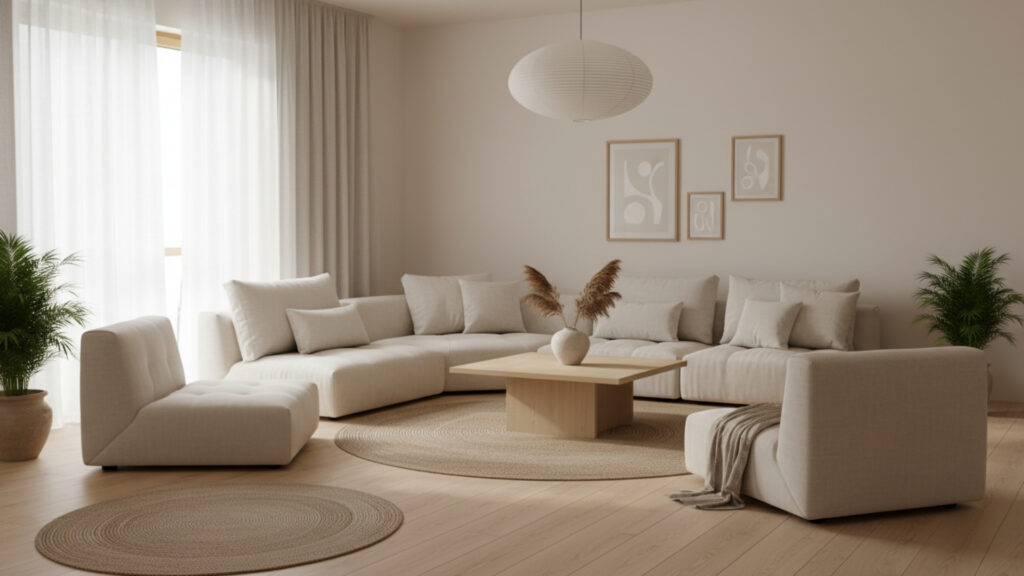
Low-profile furniture is essential in Japandi living rooms, emphasizing both simplicity and comfort. Sofas, chairs, and coffee tables are designed closer to the ground to create a grounded and open look. This design choice enhances the feeling of space while maintaining a clean, uncluttered appearance.
Furniture is selected for comfort and function, often featuring neutral upholstery or natural wood frames. Low seating encourages relaxed lounging and reflects the Japanese influence of floor-level arrangements. Minimalist silhouettes ensure the room feels spacious and calm, while well-crafted furniture pieces add understated sophistication. Every piece is intentional, combining style and practicality seamlessly.
3. Natural Wood Accents for Warmth and Texture
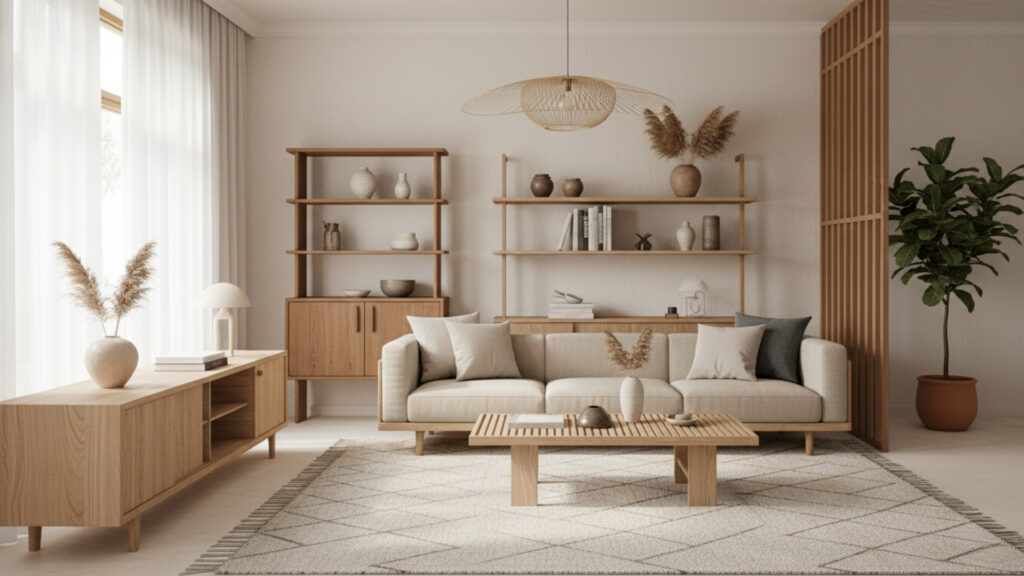
Natural wood brings warmth and tactile texture to a Japandi living room, creating a welcoming and organic atmosphere. Scandinavian light-toned woods and darker Japanese finishes are often combined to provide contrast while maintaining visual harmony.
Wooden elements include flooring, furniture frames, shelves, or wall panels. The grain, knots, and natural textures of wood add subtle detail that balances minimalist interiors. Wood also connects the indoor space with nature, reinforcing the calm and serene ambiance. Carefully chosen wooden accents make the room feel grounded, warm, and visually inviting.
4. Clean Lines and Functional Layouts
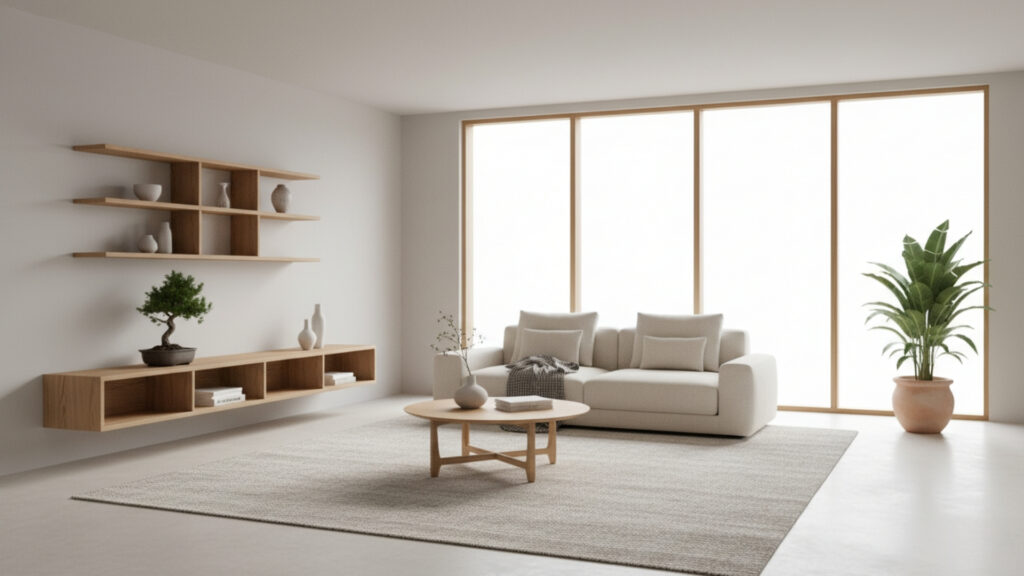
Japandi living rooms prioritize clean lines and purposeful layouts to maintain simplicity and visual order. Furniture, shelves, and decorative pieces are arranged strategically to maximize both movement and open space.
This approach reduces clutter and creates a sense of calm throughout the room. Symmetrical arrangements or balanced asymmetry ensure harmony while promoting functionality. Open areas allow natural light to fill the space, enhancing the airy and uncluttered aesthetic. Every layout decision is intentional, focusing on both visual appeal and practical usability.
5. Textiles and Soft Furnishings for Comfort
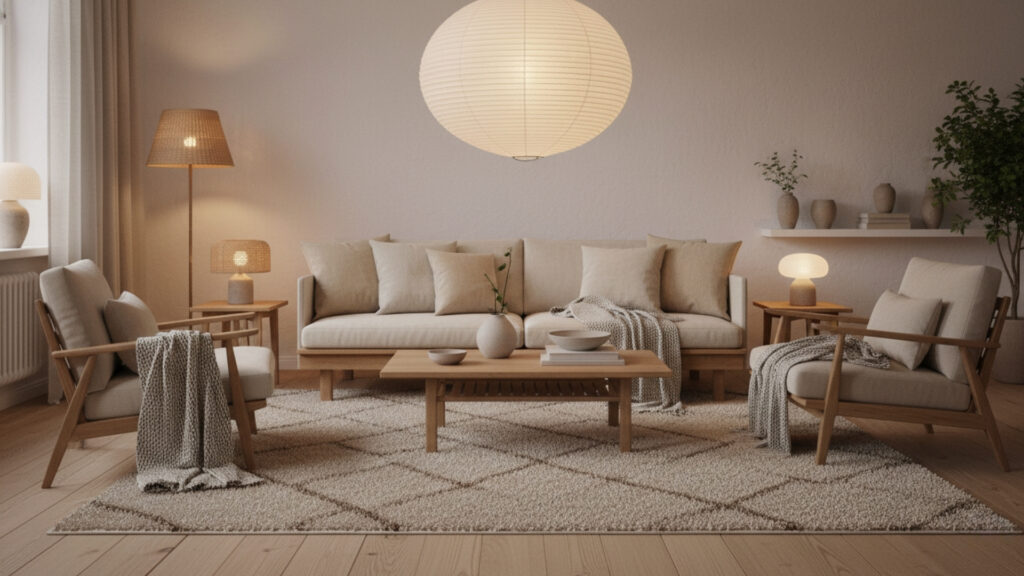
Soft textiles add warmth, texture, and comfort to Japandi living rooms while maintaining the minimalist style. Natural fabrics like linen, cotton, or wool are commonly used for cushions, throws, and area rugs.
Layering textiles in neutral tones or muted patterns enhances coziness without overpowering the space. Rugs help define seating areas, while cushions soften clean-lined furniture. These materials create a tactile contrast with wooden furniture and smooth surfaces. Thoughtful selection of soft furnishings elevates comfort while remaining visually restrained and elegant.
6. Minimalist Storage Solutions for Clutter-Free Space
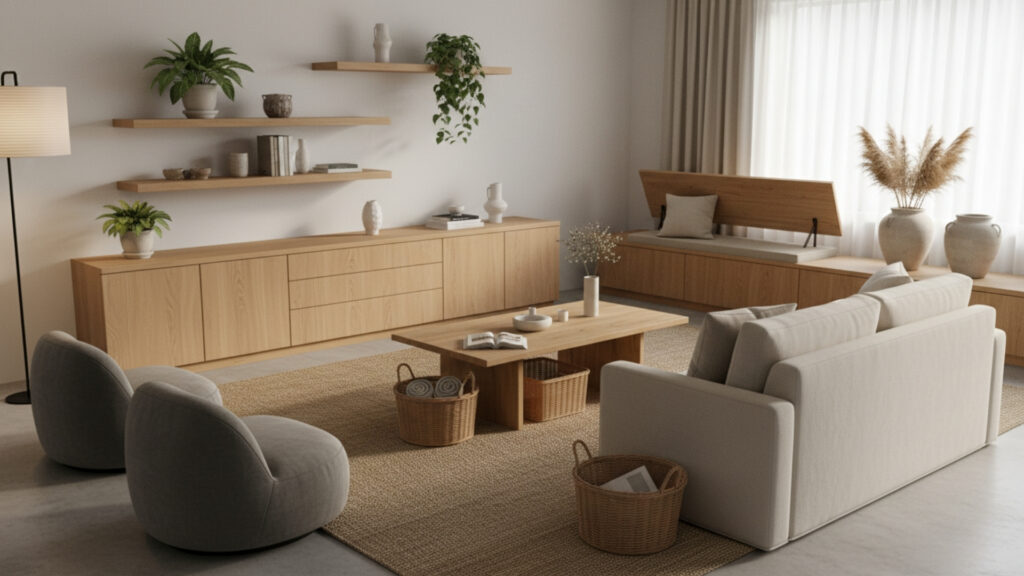
Storage is critical in Japandi design to preserve a clean, uncluttered environment. Built-in cabinets, low-profile shelving, and multipurpose furniture provide hidden or integrated storage options.
These storage solutions keep everyday items organized while maintaining a minimalist aesthetic. Baskets, boxes, or trays in natural materials complement the overall design. Properly planned storage ensures the living room remains serene, functional, and visually appealing. Eliminating clutter enhances the feeling of calm and order that defines Japandi interiors.
7. Greenery and Indoor Plants for Natural Touch
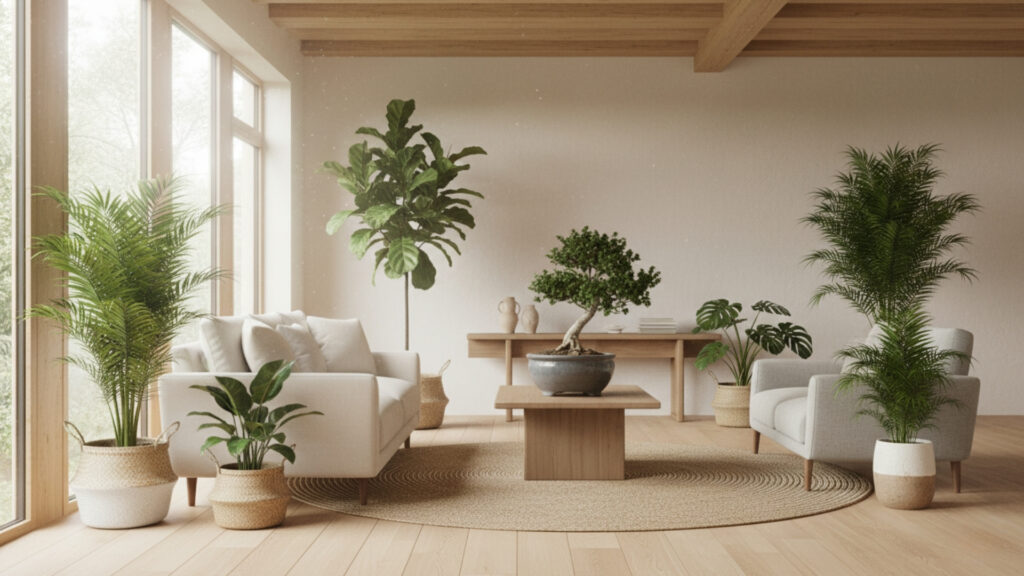
Indoor plants add life, color, and a natural element to a Japandi living room without disturbing its minimalist aesthetic. Bonsai trees, palms, or potted leafy plants create a sense of tranquility and connection to nature.
Plants complement wooden textures and neutral color palettes, contributing to a balanced environment. They bring freshness and improve air quality, enhancing the overall comfort of the space. Using simple pots or woven baskets keeps the design cohesive. Carefully placed greenery emphasizes serenity while reinforcing the Japandi philosophy of harmony with nature.
Also Explore: 8+ Vanity Designs to Elevate Your Bathroom or Dressing Space
8. Japanese and Scandinavian Decor Elements
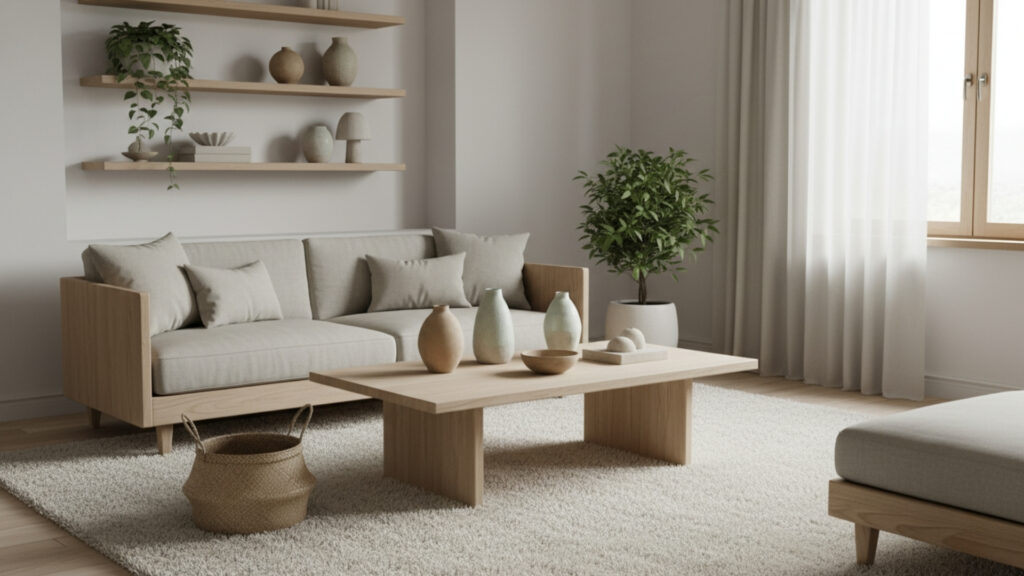
Japandi decor blends the understated elegance of Japanese design with Scandinavian functionality. Minimalist vases, ceramic bowls, handcrafted wooden accessories, and simple ceramics enhance the space subtly.
Decorative elements are sparse, purposeful, and thoughtfully arranged to highlight craftsmanship rather than quantity. This approach creates visual interest while avoiding clutter. Using objects with natural textures and muted tones ensures cohesion with the overall room design. Thoughtful decor elevates the space while staying true to Japandi simplicity and elegance.
9. Natural Light and Minimal Window Treatments
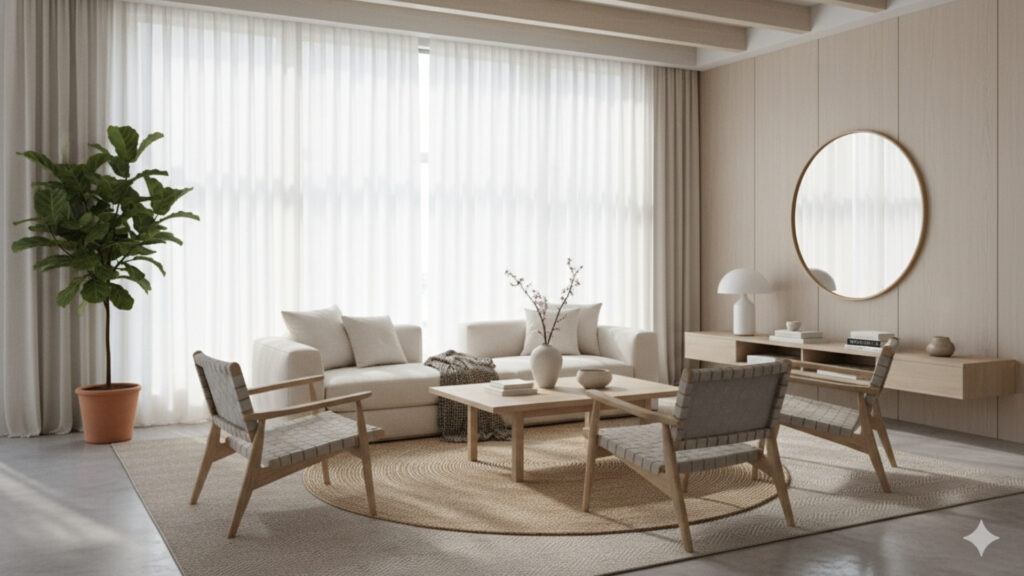
Maximizing natural light is essential in Japandi living rooms to keep the space bright, airy, and inviting. Large windows or sliding doors are often left uncovered or dressed with sheer curtains to allow sunlight to filter through.
Minimal window treatments maintain privacy while enhancing openness. Natural light highlights textures, wood finishes, and neutral colors throughout the room. Well-lit interiors feel more spacious, calm, and harmonious. Lighting choices work hand-in-hand with furniture and color palettes to create a serene living environment.
10. Layered Lighting for a Warm Ambiance
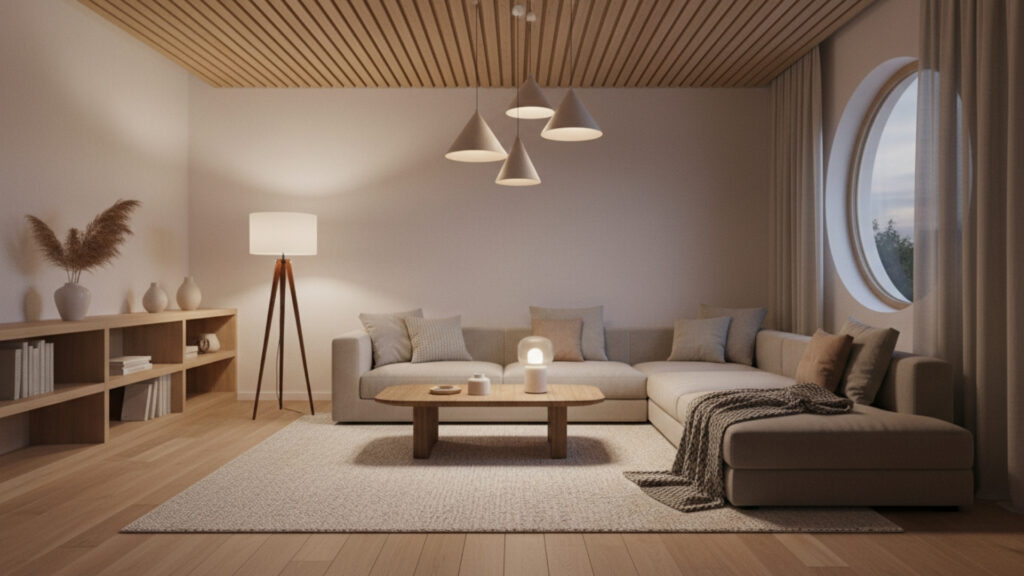
Layered lighting in Japandi interiors balances functionality and warmth. Overhead fixtures, floor lamps, and table lamps provide a mix of direct and ambient light, creating a cozy and versatile environment.
Warm tones are favored to enhance comfort and highlight natural materials like wood and textiles. Lighting is strategically positioned to illuminate activity areas while maintaining soft shadows. Fixtures with simple designs, wooden elements, or natural textures complement the minimalist style. Layered lighting supports relaxation, visual interest, and functional usability in every corner.
Also Explore: 7+ Upcycled Home Decor Tips to Create Stylish Sustainable Interiors
11. Low Tables and Multipurpose Furniture
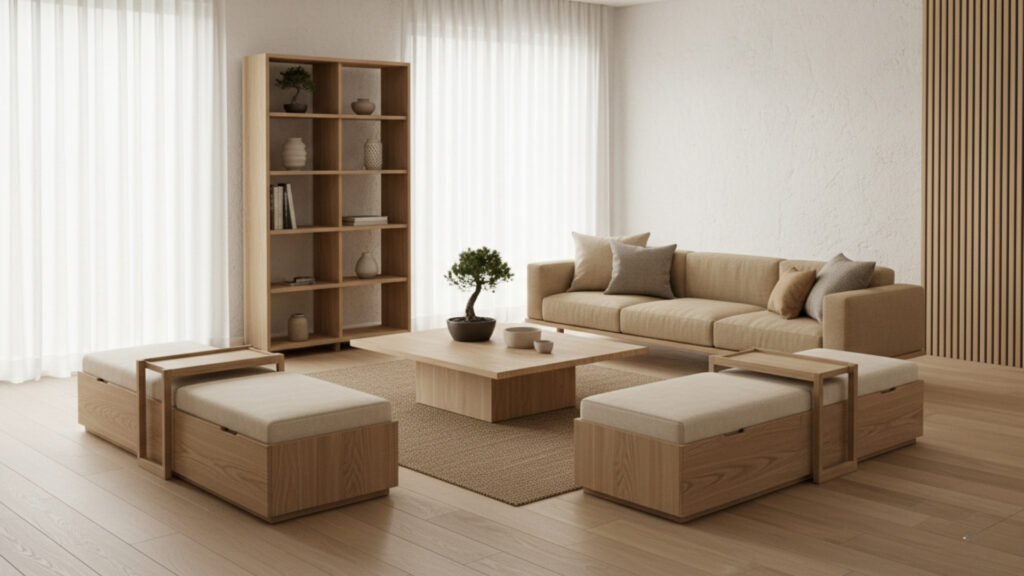
Low coffee tables and multipurpose furniture reflect both Japanese traditions and Scandinavian practicality. They are unobtrusive, functional, and maintain the clean, open lines typical of Japandi design.
Many multipurpose pieces include hidden storage compartments or can be folded for flexibility. Low-profile tables enhance the grounded aesthetic and allow for easy interaction within seating areas. Combining functionality with style ensures that furniture contributes to both organization and the calming atmosphere of the room.
12. Simple Artwork and Wall Decor
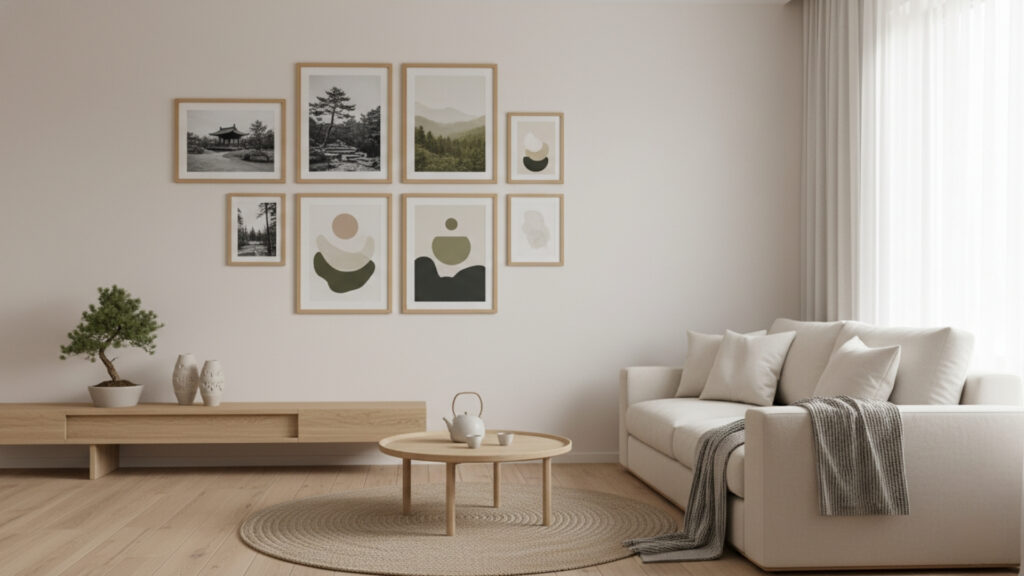
Minimalist artwork reinforces the serene atmosphere of a Japandi living room. Black-and-white photography, abstract prints, or small handcrafted pieces are ideal choices.
Frames are usually in natural wood or muted tones to harmonize with the neutral palette. Wall decor is sparse and intentional, providing visual interest without creating clutter. A well-curated display highlights personal taste while keeping the room tranquil and balanced. Artwork and wall accents support the clean, minimalist, and thoughtful philosophy of Japandi interiors.
Summary
Japandi living rooms achieve the perfect balance between Japanese minimalism and Scandinavian warmth. Through neutral colors, low-profile furniture, natural wood, soft textiles, layered lighting, functional storage, and curated decor, the style creates a serene, clutter-free environment. Greenery, natural light, and thoughtful design choices add tranquility and aesthetic appeal. Following these twelve ideas helps transform your living room into a calm, stylish, and highly functional space, reflecting harmony, comfort, and timeless elegance.

