
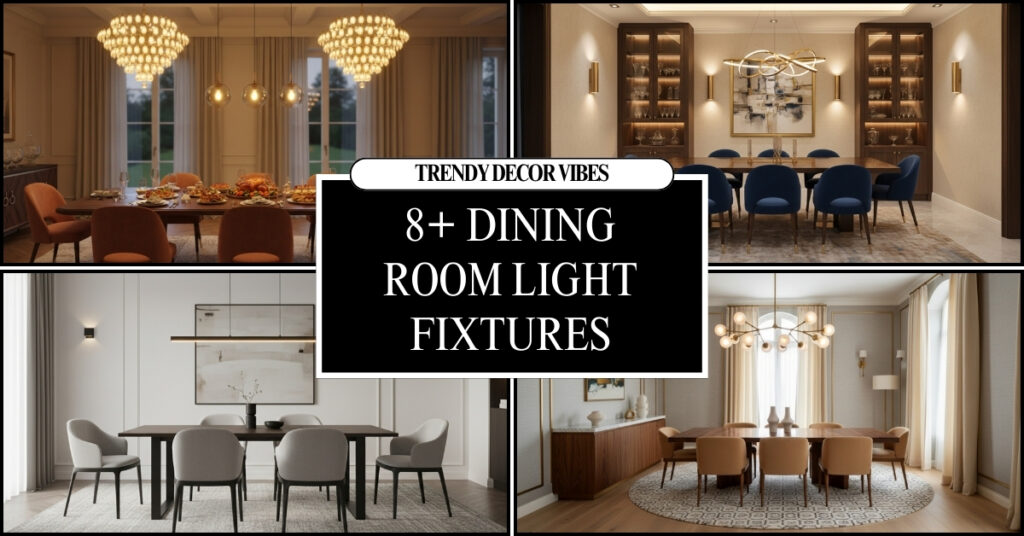
Dining spaces are no longer just about meals; they are social hubs where family gatherings, celebrations, and everyday moments take place. Choosing the right dining room light fixtures plays a crucial role in shaping the atmosphere, functionality, and overall aesthetic of the room. Lighting affects how food looks, how comfortable guests feel, and how visually balanced the space appears.
From statement chandeliers to layered lighting solutions, modern dining room lighting blends beauty with practicality. This detailed guide explores nine essential lighting ideas that help you select, style, and place dining room light fixtures that transform your dining area into a warm, elegant, and inviting space.

3-Light Industrial Metal Hanging Light Fixture
- Farmhouse
- color Black
- Dining Room
- Metal
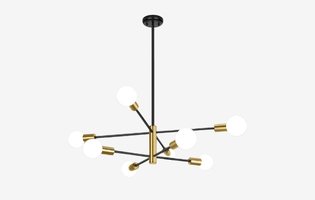
Mid Century Black & Gold Chandeliers Lighting
- Chandelier
- Black & Gold
- Metal
- Modern & Mid Century

1. Choose the Right Chandelier Size to Balance Dining Room Proportions
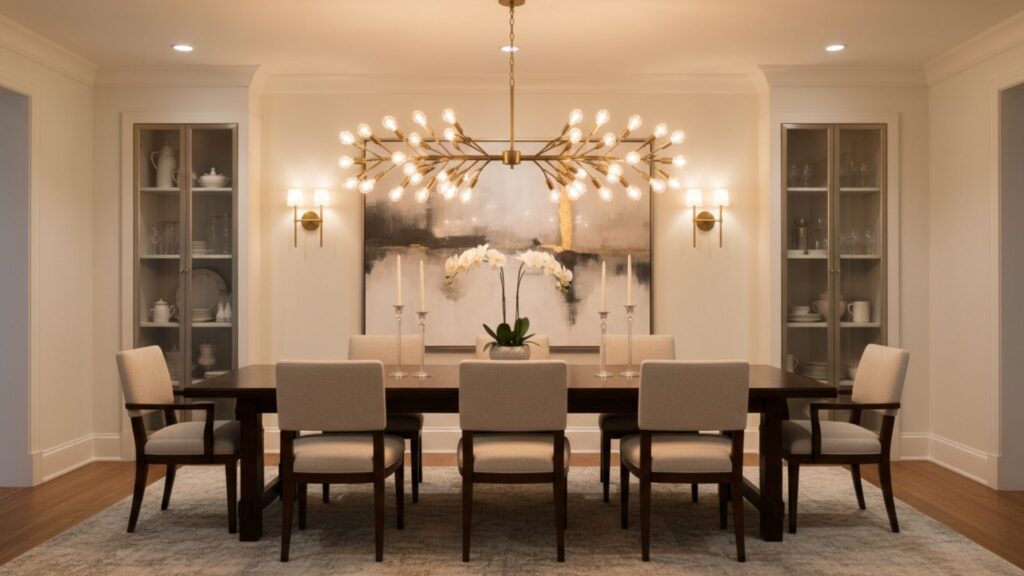
A chandelier often acts as the centerpiece of dining room light fixtures, so choosing the right size is critical. An oversized fixture can overwhelm the table, while a small one may feel insignificant. A well-proportioned chandelier should align with the width of the dining table, usually about half to two-thirds its width, ensuring visual harmony and balance.
Beyond size, the chandelier’s height also matters. Hanging it too low can block sightlines, while placing it too high reduces its impact. Ideally, the fixture should hang 30–36 inches above the table, creating an intimate glow without overpowering the space. Proper scale ensures the dining room feels refined and thoughtfully designed.
2. Lighting Styles That Complement Your Dining Room Design Theme
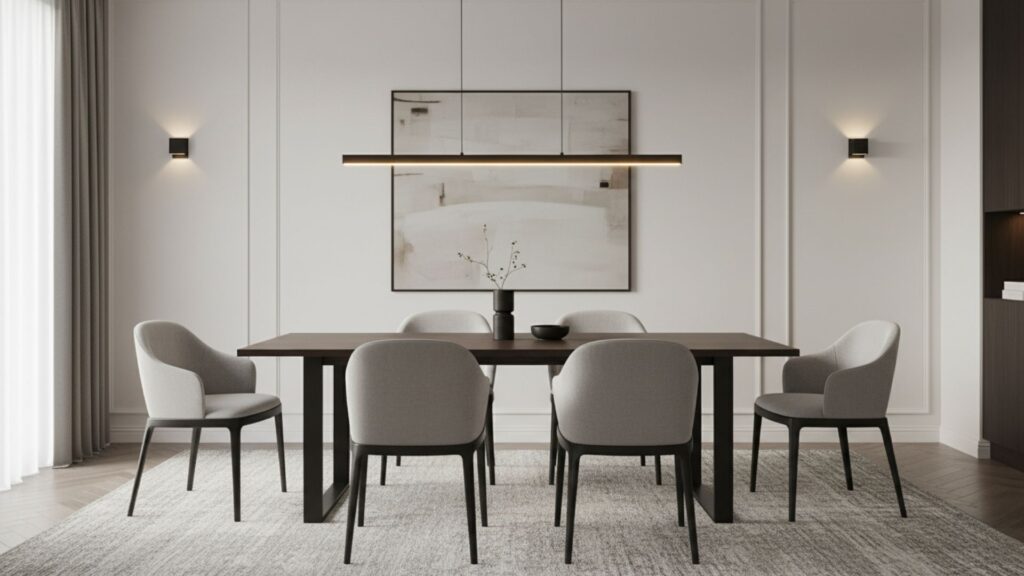
Dining room light fixtures should enhance the room’s overall design theme. For modern interiors, sleek linear pendants, minimalist chandeliers, or geometric fixtures create a clean, contemporary feel. Traditional dining rooms benefit from crystal chandeliers, bronze finishes, or candle-style lights that add timeless elegance.
In transitional or eclectic spaces, mixing materials such as glass, metal, and wood offers visual interest without clashing. Matching your lighting style to furniture, wall colors, and décor creates cohesion, making the dining room feel polished and intentional rather than visually disconnected.
3. Layered Lighting to Create Depth and a Luxurious Dining Atmosphere
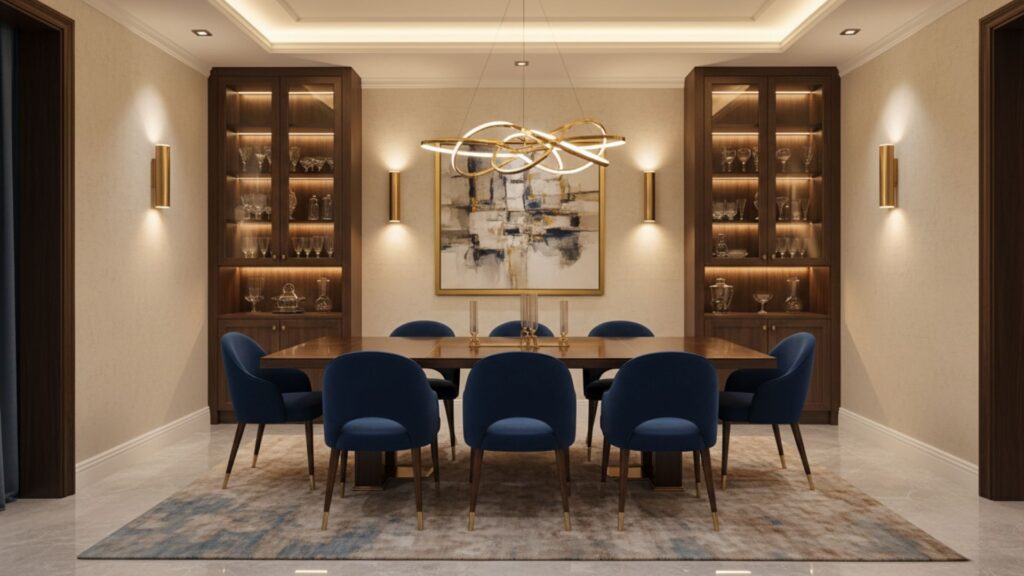
Relying on a single ceiling fixture can make a dining room feel flat. Layered lighting elevates dining room light fixtures by combining ambient, task, and accent lighting. Chandeliers or pendants provide general illumination, while wall sconces or recessed lights add depth and balance.
Accent lighting, such as LED strips in display cabinets or artwork spotlights, enhances texture and visual interest. Layered lighting allows flexibility, bright lighting for family dinners, and softer, dimmed light for intimate gatherings. This approach creates a dining environment that feels luxurious, adaptable, and welcoming.
4. Opt for Dimmable Light Fixtures to Control Mood and Ambience
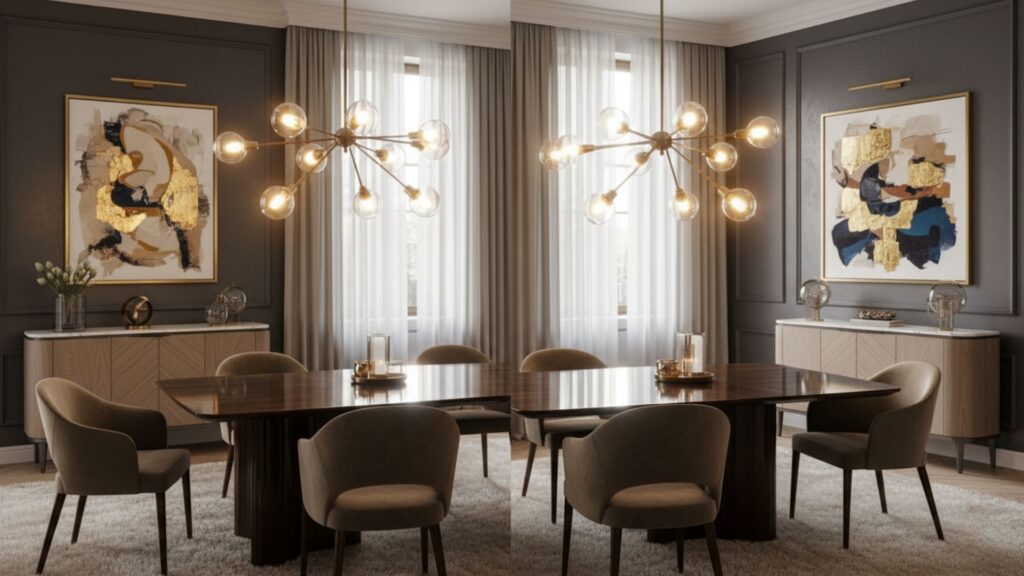
Dimmable dining room light fixtures are essential for creating the perfect dining atmosphere. Bright lighting is ideal for casual meals, homework sessions, or hosting large gatherings, while dimmed lighting adds warmth and intimacy for evening dinners and special occasions.
Installing dimmer switches gives you complete control over brightness without changing fixtures. Warm-toned bulbs paired with dimmers soften the space and enhance comfort. This simple upgrade dramatically improves the dining experience and adds a sense of sophistication to the room.
5. Match Light Fixture Materials With Dining Furniture and Finishes
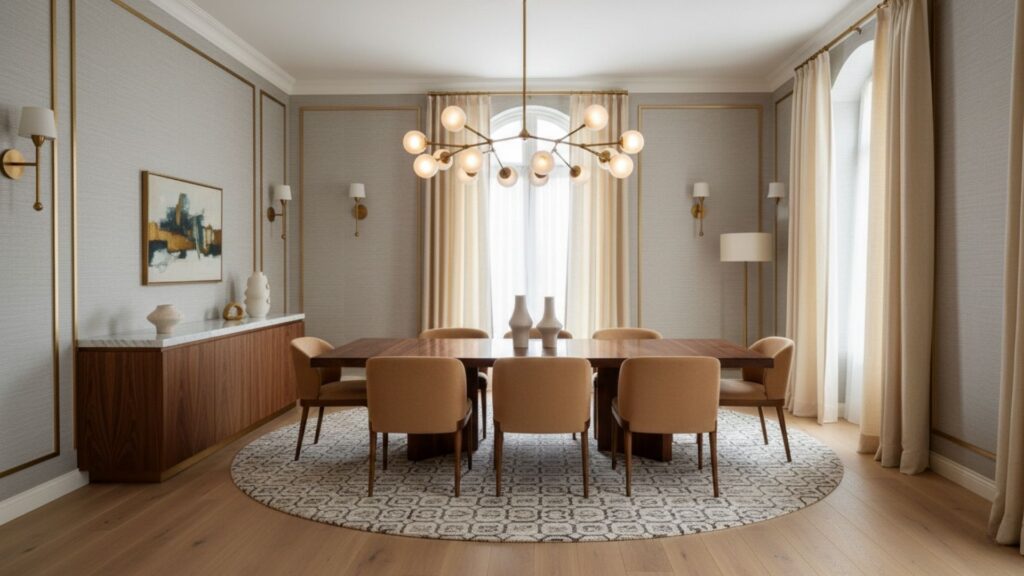
Material coordination is key to achieving a cohesive dining space. Dining room light fixtures made from metal, glass, wood, or fabric should complement existing furniture finishes. For example, black or brass fixtures pair beautifully with wooden dining tables, while chrome or nickel finishes suit glass or marble surfaces.
Texture also matters. Frosted glass softens light, crystal reflects elegance, and woven or fabric shades add warmth. When materials are thoughtfully matched, lighting feels like an extension of the room’s design rather than a separate element.
6. Position Multiple Pendants for Long or Rectangular Dining Tables
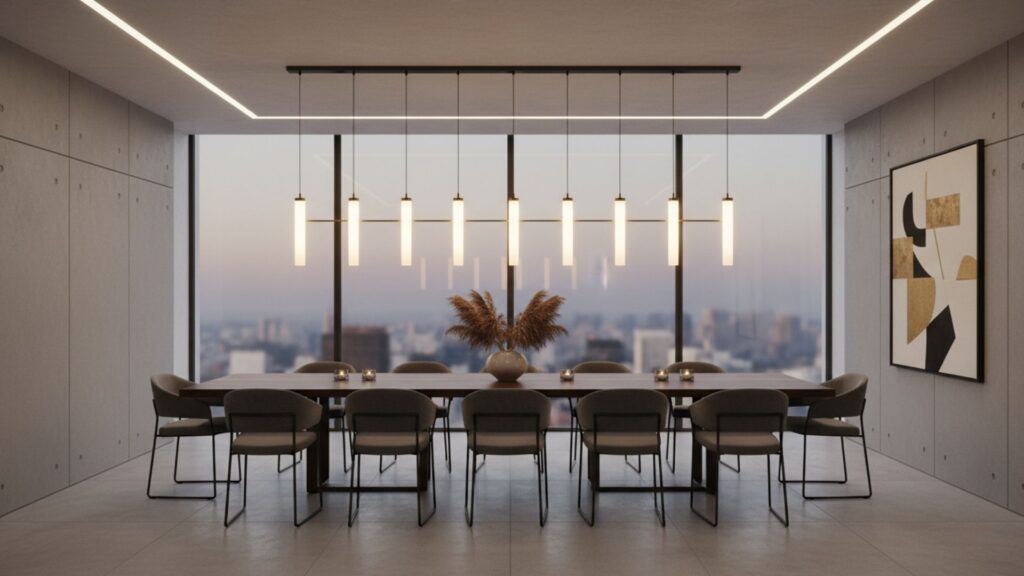
For longer dining tables, a single fixture may not provide balanced illumination. Using multiple pendants instead of one large chandelier ensures even lighting across the table. This approach works especially well in modern dining spaces with rectangular or oval tables.
Spacing pendants evenly creates symmetry and visual rhythm. Linear pendant fixtures are also an excellent option, offering uniform light coverage with a streamlined appearance. This setup enhances both functionality and design, making the dining room feel professionally styled.
6. The Right Bulb Temperature for Comfortable Dining Experiences
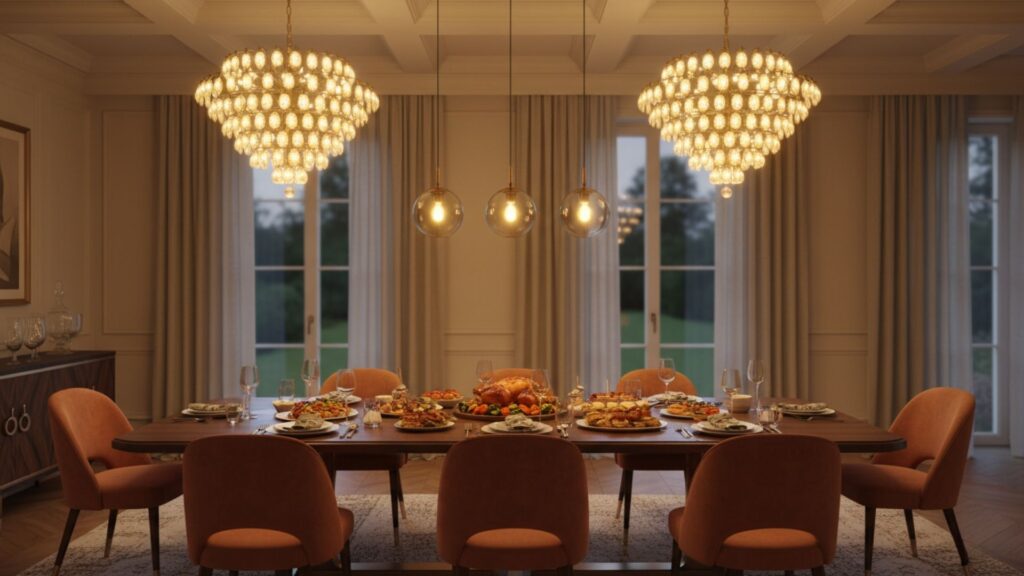
The bulb temperature you choose significantly impacts how your dining room feels. Warm white bulbs (2700K–3000K) are ideal for dining room light fixtures because they create a cozy, flattering glow that enhances food presentation and skin tones.
Avoid overly cool or harsh lighting, which can make the space feel clinical and uncomfortable. Energy-efficient LED bulbs now offer warm tones with excellent brightness control, making them a practical and stylish choice for dining areas.
7. Incorporate Statement Lighting to Create a Focal Point Above the Table
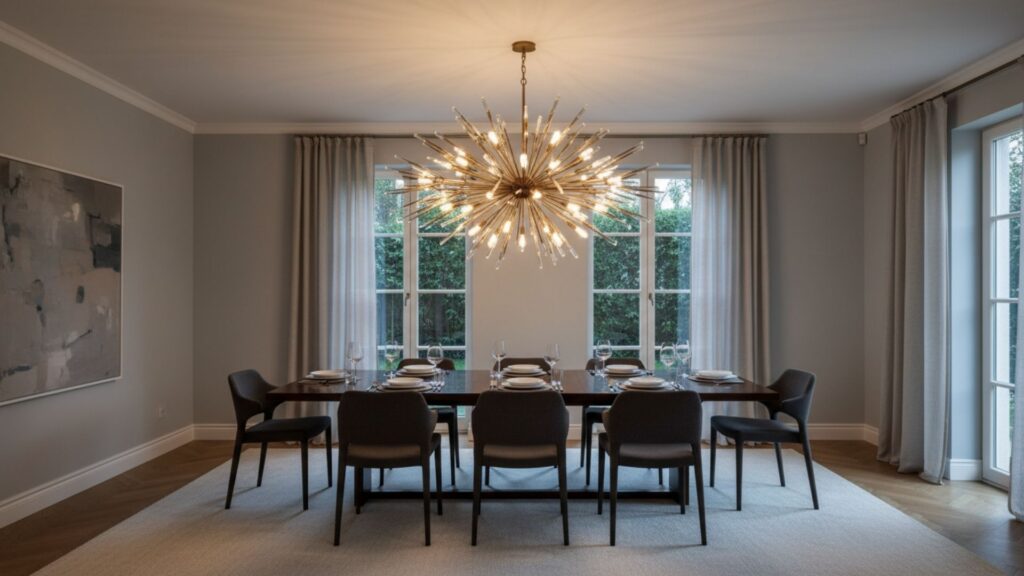
Statement dining room light fixtures act as functional art pieces. Bold chandeliers, sculptural pendants, or oversized fixtures instantly draw attention and anchor the dining space. They define the room’s personality and elevate its overall design.
When using statement lighting, keep the surrounding décor simple to avoid visual clutter. Let the fixture shine as the centerpiece while supporting elements remain understated. This balance creates a dramatic yet refined dining room aesthetic.
8. Ensure Proper Ceiling Height Considerations for Dining Room Fixtures
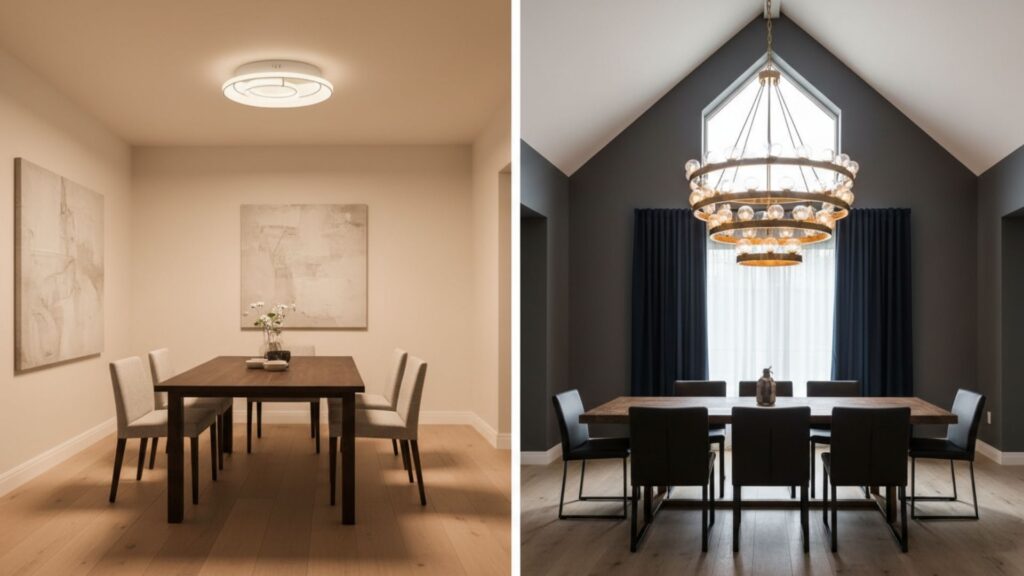
Ceiling height plays a crucial role in selecting dining room light fixtures. In rooms with lower ceilings, flush mounts or semi-flush fixtures prevent the space from feeling cramped. Slim-profile chandeliers also work well without overwhelming the room.
For high ceilings, dramatic chandeliers, multi-tiered fixtures, or cascading pendants add grandeur and fill vertical space beautifully. Choosing fixtures that suit the ceiling height ensures comfort, safety, and visual balance in the dining room.
Summary
Well-chosen dining room light fixtures transform the dining area into a stylish, functional, and inviting space. From perfectly sized chandeliers and layered lighting to dimmable controls and coordinated materials, each lighting decision contributes to ambiance and comfort. By selecting fixtures that complement your table, ceiling height, and design style, you create a dining room that feels elegant, welcoming, and thoughtfully illuminated for every occasion.

